The 3rd Dimension of AI: Why "Touch" is the Next Frontier for Intelligent Models
AI's Tactile Blind Spot
For the last decade, Artificial Intelligence has learned to perceive the world at a superhuman pace. Our most advanced Large Language Models (LLMs) and Small Model Libraries (SMLs) can consume and understand the entirety of the written word. Our computer vision models can identify a face in a crowd or a specific cell in a petabyte of medical data. We’ve even given AI “ears” through advanced audio processing.
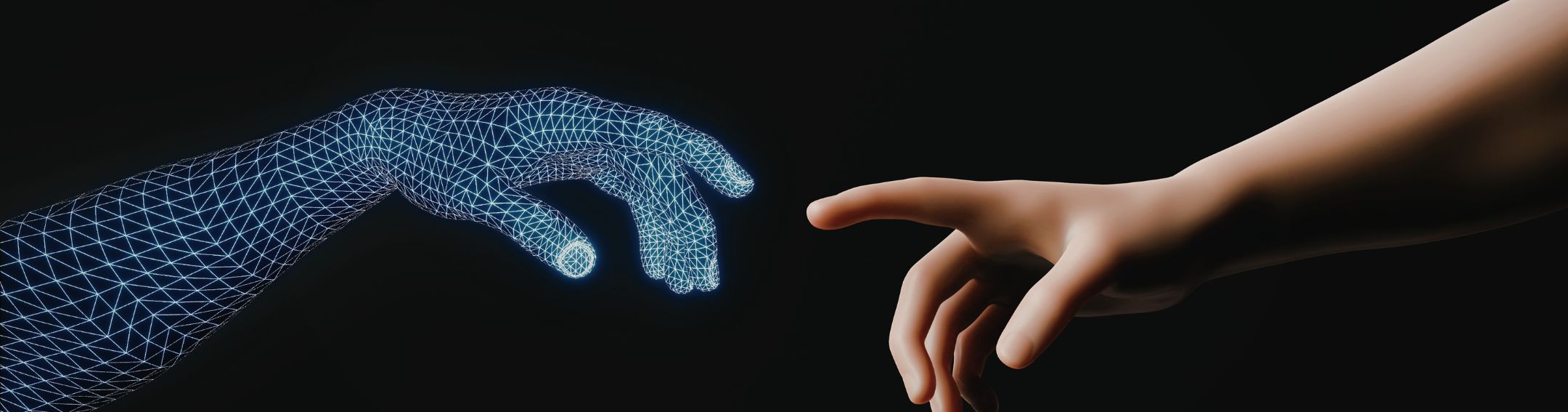
AI can see and hear. But it cannot feel.
This is AI's critical "tactile blind spot." Touch, one of humanity's core senses, is the data stream that provides context for the physical world, pressure, texture, shape, grip, and force. Without it, an AI can see a picture of a stone but can’t tell you how heavy it is.
This is not just a philosophical gap; it's a functional one. As we move from digital AI assistants to physically interactive agents in robotics, healthcare, and manufacturing, this missing dimension is the primary barrier to creating truly reliable and functional outputs.
The global multimodal AI market is projected to surge from $1.73 billion in 2024 to $10.89 billion by 2030, a staggering CAGR of 36.8%. This growth has been built on text, image, and video. We believe the next leap will come from integrating a fourth dimension: the sense of touch. This article explores the immense potential of combining two discrete technologies, platforms like NetMind.AI's powerful models and TG0's advanced tactile sensing, to provide the "nerves" and the "brain" for the next generation of physical-world AI.
When "Seeing" Isn't "Understanding"
Current AI models are powerful but brittle when they interact with the physical world. An AI in a self-driving car can see a tire on the road, but it can't feel the change in road texture that signifies black ice. A robotic arm can be programmed to pick up a box, but it struggles to adapt its grip if the box is heavier than expected or starts to slip.
This is a data problem. The AI is missing the crucial, real-time feedback loop that humans take for granted. We subconsciously adjust our grip on a coffee cup a dozen times in a single second based on perceived weight, temperature, and slip. To an AI, these are all critical, missing data points.
Building the "Nerves" and the "Brain" with Advanced Sensing Technology
To solve this, a solution would require two distinct components: a way to capture this new data dimension organically, and a platform powerful enough to understand it.
1. Capturing Tactile Data (The "Nerves"): Technologies like TG0
The challenge with "touch" is that traditional sensors are often bulky, rigid, and expensive. You can't simply bolt a sensor onto a steering wheel or a surgical tool without fundamentally changing how it's used, which in turn taints the data.
This is where pioneering technology like TG0’s provides a blueprint for the "nerves." Instead of adding discrete sensors, TG0's platform technology transforms the material itself into a smart, 3D sensing surface. By using standard, robust polymers, this technology can create surfaces of any shape—from a car's steering wheel to a smart chair or a medical device—that can sense the full range of tactile interactions:
- Pressure Mapping: Where is force being applied?
- Deformation Sensing: How is the object's shape changing?
- Shear-force sensing: What is the direction or feel of the interaction?
This approach allows for the safe, organic, and passive capture of high-resolution touch data without altering user behaviour.
"The goal for sensing technology should not be to just 'add sensors,' but to give everyday objects a human-like sense of touch," according to Dr Liucheng Guo, the co-founder and CTO at TG0. "By turning a product's existing polymer surfaces into a high-fidelity data source, we can capture a data stream that has been invisible to AI. This provides the raw, nuanced language of physical interaction that intelligent systems currently lack."
2. Understanding Tactile Data (The "Brain"): Platforms like NetMind.AI
A massive, new, real-time data stream is useless without an AI platform built to handle it. This is where the "brain" component, exemplified by NetMind.AI's platform, becomes critical. A platform like NetMind's, which already hosts a powerful library of multimodal models (processing text, audio, and vision), is uniquely positioned to integrate this new "4th dimension" of tactile data.
By feeding high-fidelity pressure and deformation data into advanced models, an AI could move beyond simple pattern recognition. It could then correlate data streams to build a holistic understanding:
- Vision + Touch: The AI not only sees the robotic arm grasping a cup, but feels the 3-newton grip force and the 0.2mm slip as the cup begins to tilt.
- Audio + Touch: The AI not only hears the car's engine, but feels the high-frequency vibrations in the steering wheel that signal a change in road surface.
This creates a robust, multi-sensory context that would dramatically improve model reliability and unlock new functionalities.
“At Netmind, we see touch as the missing sensory layer that will finally ground AI in the physical world. As Kai, founder and CEO of Netmind.AI points out. When you pair TG0's high-fidelity tactile data with advanced multimodal models offered on Netmind's platform, you improve performance and unlock entirely new intelligent, adaptive use cases.”
Grounded in Reality: The Potential New KPIs of Touch
This synergy is not just theoretical; it's focused on delivering measurable improvements for technical and industrial applications. The global tactile sensor market was valued at $16.4 billion in 2024, proving the demand for this technology is already here.
By combining advanced sensing with powerful AI models, we can begin to establish new quantitative benchmarks for AI performance:
- Robotics & Automation:
- Metric: Grip-Slip Error Rate.
- Impact: A reduction in drop/crush errors in automated logistics and manufacturing by enabling AI to "feel" an object's weight and adjust grip in real-time.
- Automotive & HMI (Human-Machine Interaction):
- Metric: Driver Alertness Score (based on grip pattern and micro-vibration analysis).
- Impact: An AI co-pilot that could distinguish between a relaxed, attentive grip and a fatigued or distracted one, providing a new, critical safety layer.
- Healthcare & MedTech:
- Metric: Material Hardness Classification Accuracy.
- Impact: AI-assisted diagnostic tools like smart beds that track patient posture and pressure points to prevent sores.
The Future is Holistic
The AI revolution has so far been disembodied. It has existed behind screens, in speakers, and in the cloud.
The potential to combine groundbreaking sensing technology with powerful AI platforms points to a future where AI is brought into the physical world. By giving models a "sense of touch," we can create a new, holistic intelligence that is more reliable, more functional, and fundamentally more human. This "4D" data is the key to unlocking the next wave of innovation, moving AI from a simple tool of information to a true partner in a physical world.
About TG0
TG0 is revolutionising human-machine interaction for innovative hardware brands seeking to elevate their product experiences. We provide a platform technology that transforms physical materials into smart, touch-sensitive surfaces. Our patented material-based sensing innovation replaces complex, costly, and rigid electronic sensor assemblies with flexible, single-piece smart polymers. This allows for intuitive, 3D controls to be seamlessly integrated into any shape or surface.
About NetMind.AI
The NetMind.AI team has been delivering all-in-one enterprise AI solutions, from consulting to implementation, since 2017 in the UK & US. Our unique advantage lies in our foundational technology: a distributed AI platform that has been empowering thousands of developers daily with GPUs, scalable inference, advanced agentic systems and MCP services. Combined with our renowned research publications, we ensure the latest AI technologies give you measurable returns within weeks, not months.

